
How to report AI visibility to clients
By Hamza Rivera, updated
Short answer: Report AI visibility as a share across repeated runs of a fixed question list, with pages cited, wrong facts found and a dated list of work done. State how it was measured, and keep it apart from Google and ad results.
- A client report on AI visibility should show a share across repeated runs, not a screenshot of one answer.
- Log four things per run: named or not, position in any list, who else is named and which pages are cited.
- Report the question list, the dates, the tool and the plan used, so the next month can be compared.
- Add what was changed on the client's pages that month, so the report shows work even when answers did not move.
- Keep AI visibility, Google results and any ad results in separate sections.
Clients are used to rankings, and AI visibility has none. The agency has to decide what to show instead and explain it in a page. A report that is clear, repeatable and honest about variation keeps the client's trust in months where nothing moves. This guide gives a layout agencies can reuse, and our tracking method covers how to collect the data.
Agencies that want this report prepared for them use our white-label AEO and GEO.
Reporting AI visibility is closer to a poll than a league table. You ask the same question to many people and report the share who answer each way. You do not report one voter's reply.

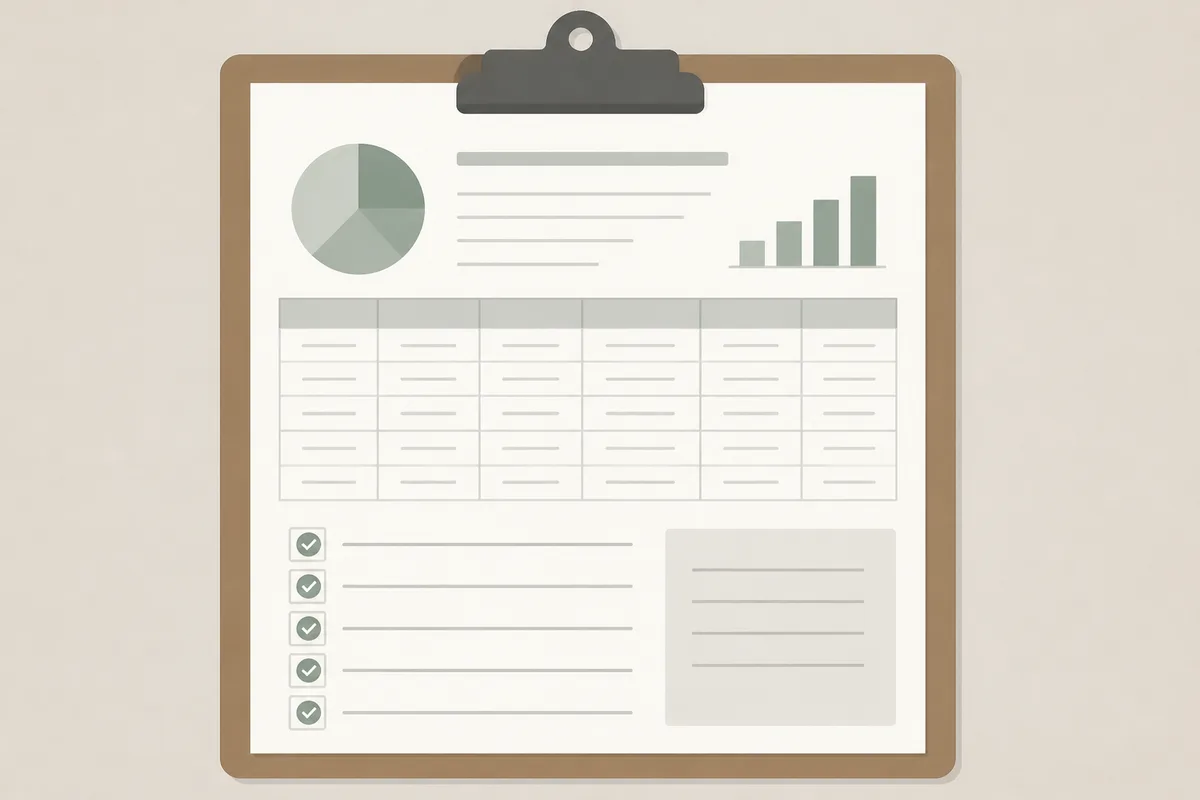
The one-page layout
| Section | What it shows | Verdict |
|---|---|---|
| Summary | The share of runs in which the client was named, this month and the last three | Lead with it |
| Question table | Each question, its share and who else was named | Shows weak topics |
| Pages cited | Which client pages appeared as sources | Shows what works |
| Wrong facts | Any answer that got hours, services or location wrong, and the fix | Act on these first |
| Work done | Dated list of page, access and listing changes | Always include |
| Next month | The three changes planned | End with it |
Say how it was measured
At the foot of the report, state the question list, the date range, the tool and plan used and the number of runs per question. AI answers vary, so a client who reads that you asked each question several times understands why the figure is a share and not a score.
Use the client's own data as well
Add referral traffic from AI tools in analytics, with a note that many visits arrive with no referrer so the figure is a minimum. For Google's AI features, Google reports on pages in the same performance data as ordinary search, so use Search Console for that part.
Keep the sections apart
A mention in an answer is not an ad and not a ranking. Report AI visibility, Google search results and any ChatGPT ad results in separate sections, each with its own method note. Ads and organic mentions behave differently and clients mix them up.
A worked example: building the first report
Here is a first monthly report for an imagined accounting firm, built in the order the data arrives. The numbers are left as blanks to fill, because they belong to the client.
- Freeze the list. Fifteen questions, written in the customers' words, saved with the date. Do not edit it for three months.
- Ask each question several times. Use fresh chats and the same tool and plan every month. Save the full text of each answer.
- Mark each run. Named or not, position if there is a list, other businesses named, pages cited.
- Work out the share. Runs that named the client divided by total runs, per question and overall.
- Write one paragraph. What moved, what did not and what we think caused it. Put the dated list of changes under it.
- List the wrong facts. Any answer that stated wrong hours, services or places gets a row and a fix.

A line you can reuse for a quiet month
"The share of answers naming you was about the same this month. We changed these three pages and fixed these two listings, and we expect to see the effect over the next two or three months. Here is what we plan next." That is honest, short and shows the work. Avoid explaining a flat month with a theory you cannot back up.
The time it takes
Asking and logging fifteen questions several times each is a few hours the first time and less once the sheet exists. Writing the page, with the change log, takes another hour or so. If you hand the asking to a partner, your own time is the review before it goes out, about half an hour.
What clients ask next
Why did the number go down?
Answers vary from run to run, so a small drop can be noise. Look at the same question over several months before you read it as a trend, and check for a wrong fact or a blocked page.
Which competitors are being named?
The log records them. Show the two or three most often named, and the pages of theirs that are cited, since that tells you what a good answer page looks like in this field.
Can we see the real answers?
Yes. Keep them in a shared folder and link it. Clients trust a figure more when they can read the text behind it.
What to put on the page, in order
- The one-paragraph summary. Written last, placed first.
- The share table. One row per question, with this month and last month side by side.
- The change log. Dated list of pages edited, listings fixed and access changes.
- The wrong-facts list. Anything an answer got wrong, with the fix and its status.
- The plan. Two or three tasks for next month.
Want help with white-label AEO and GEO?
Send us your site and we will record a short video of what we would fix first, or reply by email. Prefer to talk? A call is there too.
Get a free video audit See the serviceWhat to leave out
Leave out single lucky answers, screenshots chosen only because they look good and any figure you cannot explain in one sentence. Also leave out forecasts. You can say what you expect to look at next, but a promised number turns every normal dip into an argument.
A report that only contains good news is a greeting card. Clients can tell the difference.
A short checklist before you send it
- The question list is the same one as last month.
- Every figure has the raw answers behind it, saved.
- Nothing in the text promises a mention or a rank.
- The client can tell what you did and what you will do next.
A sample paragraph you can adapt
"This month we asked the same 15 questions, five times each. Your business was named in some of the answers, and the list below shows which questions and how often. We fixed two wrong facts in directory listings and rewrote the two service pages that should answer the most important questions. We will ask the same questions again next month and report what moved." Fill in your own numbers from the log. Keep the tone plain and leave out adjectives that sound like selling.
How often to report
Monthly is enough for most clients. Weekly reports tempt people to read noise as a trend, because answers vary from run to run. If a client wants more frequent updates, send a short note when you publish a change, and keep the full report monthly. A quarterly page that compares three months side by side also helps, since it shows the longer pattern that a single month hides.
Who should read it
Write it for the person who approves the budget, not for the person who knows SEO. If a business owner can read the first paragraph and say what happened, what you did and what comes next, the report has done its job. Everything under that paragraph is the evidence for anyone who wants to check.
Mistakes to avoid
- Showing a single screenshot as the result.
- Inventing a score with no method behind it.
- Changing the question list between months.
- Leaving out months where nothing moved.
A report with one lucky screenshot is a good story and a bad measurement.
Keep the raw answers in a folder the client can open. When a number moves, the text tells you why.
Where to go from here
Need the monthly AI visibility report written for you?
Send one client site and we will reply with the question list and a sample of the report layout, under your agency name. We can start with an email or a short recorded video, and a call if you prefer one.
See the white-label AEO and GEO serviceOur white-label AEO and GEO service delivers the monthly re-ask report and the raw answers without Passieon branding, and sits with our white label SEO reporting. See also white label SEO reports.
Related guides
Sources
- OpenAI developer docs: Overview of OpenAI crawlers, read November 14, 2026.
- Google Search Central: AI features and your website, read November 14, 2026.
Frequently asked questions
What should an AI visibility report show?
The share of runs where the client was named, results by question, pages cited, wrong facts and a dated list of changes.
Why report a share and not a ranking?
AI answers vary from run to run, so a single result is one sample. A share across several runs is a fairer measure.
How do I show progress in a quiet month?
List the dated work done on pages, access and listings, and show the trend over several months.
Can analytics show AI traffic?
Sometimes. Some visits carry the tool as the referrer, but many carry none, so treat the count as a minimum.
Should ad results go in the same section?
No. Ads are paid and mentions are not. Keep them in separate sections with their own method notes.
Want this done for your site? See what our white-label AEO and GEO page covers, or read the client results.
Related guides
- ChatGPT ads vs organic mentions: which to work on first The differences between paid ChatGPT ads and unpaid mentions in answers, what OpenAI says, and how to split a small budget.
- White label ChatGPT ads management for agencies How an agency can hand ChatGPT ads management to a partner: what the partner does, who owns the account, and what to keep out of the proposal.
- How ChatGPT ads are priced and billed, and how to set your own limit How OpenAI bills ChatGPT ads, what the max bid does, how the auction works, and how to set a ceiling from your own customer value.