
They shop by plan
Bedrooms, bathrooms, square footage, garage, single story or two. Each plan gets a page with those facts as text, the floor plan image and photos of homes built from it, so a buyer can compare and Google can read it.
Websites for home builders that turn months of buyer research into appointments. Each floor plan gets a real page, homes for sale stay current because your team can update them in the site’s editor, and the build process is set out step by step, so a buyer arrives at the first meeting with the basic questions already answered.
PageSpeed Insights on the home pages of the 7 sites we link as our work, measured November 2026, the median of three runs each.
Nobody builds a house on impulse. A buyer looks at plans, galleries and communities for months, often on a phone in the evening, and comes back to the same two or three builders again and again. The builder whose site answers their questions on each visit is the one they book a meeting with.
Bedrooms, bathrooms, square footage, garage, single story or two. Each plan gets a page with those facts as text, the floor plan image and photos of homes built from it, so a buyer can compare and Google can read it.
Galleries grouped by home, with the plan name, the finishes and where it sits, help a buyer picture their own. Model home hours go on the same page.
Cost-to-build questions are searched all year and most in January. A page on how pricing works, from the base plan to the options, and a realistic timeline answer that without a price list.
Building on the buyer’s own lot is searched less often, and it is the buyer a custom builder most wants. It gets its own page: what you check on the lot, what site work involves and how the process differs.
A plan inside a PDF or an image is slow to open on a phone, and a buyer cannot compare bedrooms or square footage across plans without opening each one. The facts belong on the page as text.
Inventory that nobody updates sends buyers to homes they cannot have. A homes-available page you can edit in minutes fixes that.
A buyer about to spend this much wants to know what happens after they sign. Sites that skip it lose buyers to builders who explain it.
Full-size gallery images from the photographer make a page slow to load on a phone. Ours are sized for each screen.
The facts as text, the plan image, photos of homes built from it, the options, and a link to ask about building it.
Quick move-in and spec homes on one page your team updates in a content editor, with the site built on WordPress or another CMS for it: add a home, mark it sold, change a photo, without waiting on anyone.
A page for each community or area, with the lots, the schools and what is nearby, linked to the homes and plans there.
From the first meeting to the walkthrough and the warranty, step by step, with what the buyer decides at each stage.
For custom builders: what you check on the buyer’s land, site work, permits, and how the process differs.
Plan or home of interest, whether they own a lot, timeline and budget range, so the first call starts in the right place.
Every plan, community and available home is its own page with a title, heading, schema and internal links in place. That gives each one a chance to show up for the searches buyers make while they research, so a buyer who comes back to compare can land on your page instead of a listing portal.
For the search work after launch, see local SEO services.
On top of the speed, accessibility, SEO, hosting handover and training that come with every build.
An architecture practice, a solar installer and a plumber: businesses whose customers look at finished work before they get in touch. Open them on your phone.
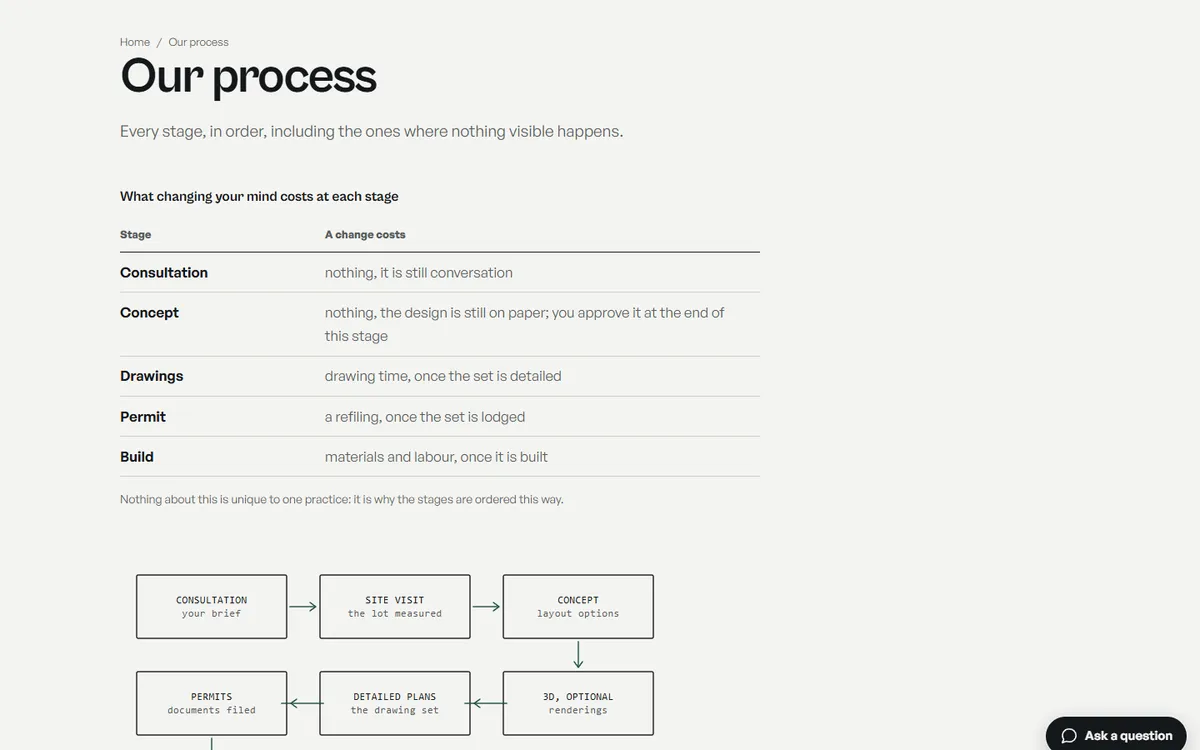
Open the live site of the architecture practice (opens in a new tab)
A site for an architecture practice: custom homes, renovations and permits, with the process drawn stage by stage and a lot coverage calculator.
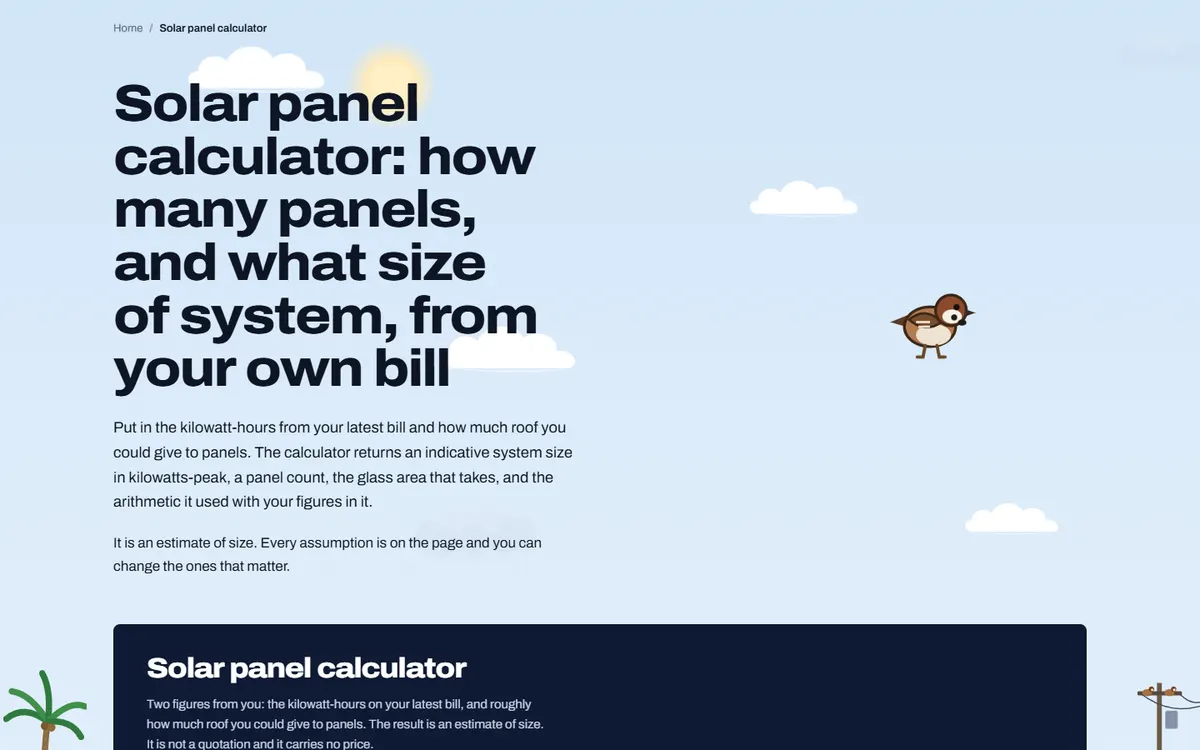
Open the live site of the solar installer (opens in a new tab)
A site for a solar panel installer, built around a calculator that sizes a system from the customer’s own electricity bill.
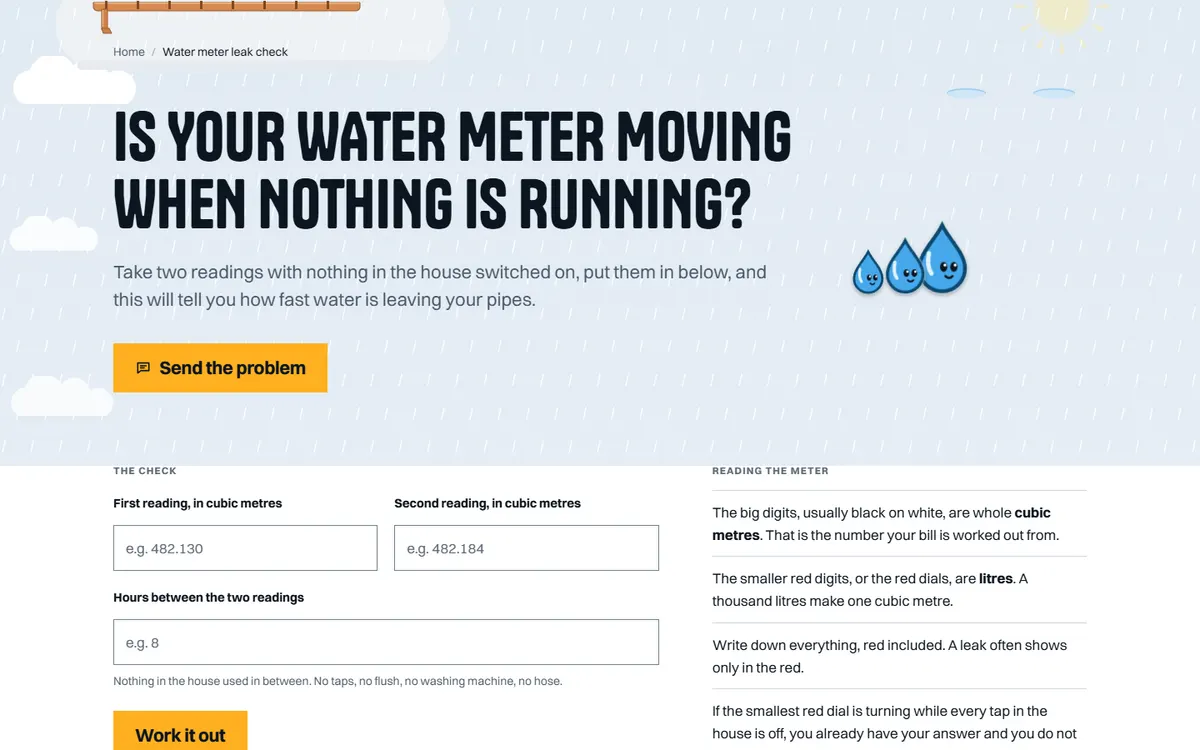
Open the live site of the plumbing business (opens in a new tab)
A home-services site for a plumber open seven days, with a water meter leak check customers run themselves.
Six stages on every site, whichever platform it is built on. The scope and the quote are agreed in writing after the first call, before any design starts.
01
What the site has to do, who it is for and what exists today. If there is a site already, we read its Search Console first, because the pages earning impressions decide what the new one must keep.
02
Every page listed with the search it answers and the action it asks for. On a redesign, every old URL is written beside its new home. You sign the map off before design starts.
03
Pages designed with your actual words and pictures, at phone width first. You review in the browser, on a staging address search engines are told to ignore.
04
Titles, descriptions, headings, schema and internal links are written as each page is built, so nothing is added at the end by somebody who never saw the page map.
05
Speed measured on a phone, every page at 320px wide and at 200 percent text, keyboard and screen reader checks, forms sent and received, redirects tested against the new build.
06
The switch, then Search Console read daily for two weeks. The domain, hosting and logins stay in your name, with a written note of how the site is built and a recorded session on editing it.
Speed
Measured in PageSpeed Insights on a phone before launch. Images sized for the slots they fill, fonts that do not block the page, no script a page does not use.
Accessibility
Text contrast, keyboard use, visible focus, alt text written for each picture, 44px tap targets on phones, and every page readable at 200 percent text.
SEO foundations
One title, description and H1 per page, schema, a sitemap that matches the site, clean URLs, redirects from every old address, and Search Console set up in your name.
Hosting handover
The domain, the hosting and every login in your name. We set the site up on your host, recommend one, or host it for you; either way you can move it.
Training
A recorded call showing whoever edits the site how to change a page, add a post and swap a picture, and a short written guide to keep beside it.
Two weeks after launch
Search Console, forms and errors checked daily for the first two weeks, and anything the launch broke fixed straight away.
It depends on how many plans, communities and homes for sale you have, and whether the inventory connects to a feed or is edited by hand. The quote comes in writing after a first call about your plans and communities.
Yes. Home builder sites are built on a platform with a content editor, such as WordPress, so your sales team can add a home or mark one sold the same day.
That is your decision. The site can show a starting price on each plan, or explain how pricing works and leave numbers for the meeting. We set it up whichever way you sell.
Yes. A booking link or form for model home visits and design meetings can sit on every plan and community page.
Each plan, community and area page is written to show up for its own search, and your Google Business Profile is linked. Listing portals and the other builders near you compete for the same searches, so we look at who ranks in your market before the call and tell you what is realistic.
You do. The domain is registered in your name, and if you ever move, the site and its files go with you.
A 30-minute call in your business hours. Tell us what work you want more of and where, and we will tell you what we would do first and what it involves. Prefer to write? Use the form, with or without a website, and the Passieon Team will reply within two business days.
Message us
Ask anything about your site or where your inquiries are going. It goes straight to a person, not a bot. Leave an email and you get a reply.