
They search for the coverage
Home, auto, life, business, workers’ comp, umbrella. A page for each line you write can show up for that search and explain how you shop it for them.
Websites for independent and captive insurance agencies that bring in quote requests and referrals you can work. Each line of coverage you write gets its own page, the quote request asks only what you need to start, and the carriers you represent and your licenses are where a careful buyer looks.
PageSpeed Insights on the home pages of the 7 sites we link as our work, measured November 2026, the median of three runs each.
A family shopping for home and auto, or a business owner who needs general liability and workers’ comp, usually compares a few agencies. They want to know which carriers you can quote, whether you understand their situation and how quickly someone will call back. A site that answers that, and asks for details without asking for everything, gets the call.
Home, auto, life, business, workers’ comp, umbrella. A page for each line you write can show up for that search and explain how you shop it for them.
Searches for an independent insurance agent run to thousands a month and peak in January. If you can quote several carriers, the site says which ones, because that is why people look for you.
Contractors, restaurants, trucking, healthcare. A page for each kind of business you insure often does more than a general commercial page.
Your agency and agent licenses, with the states you are licensed in, tell a buyer you can write their policy and let them look you up.
Twenty fields before anyone has spoken to you. Most people stop halfway. A short first step, then a call, gets more requests that turn into policies.
A strip of logos says you are appointed. It does not say what you do for a client. A few lines per line of coverage do.
Personal and commercial insurance are different buyers. One page for both rarely shows up for either.
Captive agency templates look like every other office of the same company. Your own pages about your team and your community are what set you apart.
Personal lines, commercial lines, life and benefits, each with who it is for and how you work with them.
For each kind of business you write often, with the coverages they usually need and the questions they ask.
The coverage they need, ZIP code, how to reach them and when their current policy renews, with a link to your comparative rater or carrier quoting tool if you use one.
The carriers you write with, your agency and agent licenses and the states they cover.
Claims contacts for each carrier, how to request a certificate of insurance and how to change a policy, so existing clients find answers fast.
Linked to the site, with the same name, address and hours on both.
Each coverage and business type page goes live with its title, heading, schema and internal links in place, and your office details match your Google Business Profile. Quote searches are some of the most expensive in advertising, so the pages people find through search, and through your own name, have to turn visits into requests.
For the search work after launch, see SEO for insurance agencies.
On top of the speed, accessibility, SEO, hosting handover and training that come with every build.
A solar installer with a calculator that works from the customer’s own bill, a reference site with a checker visitors run on their own products, and an architecture practice. Open them on your phone.
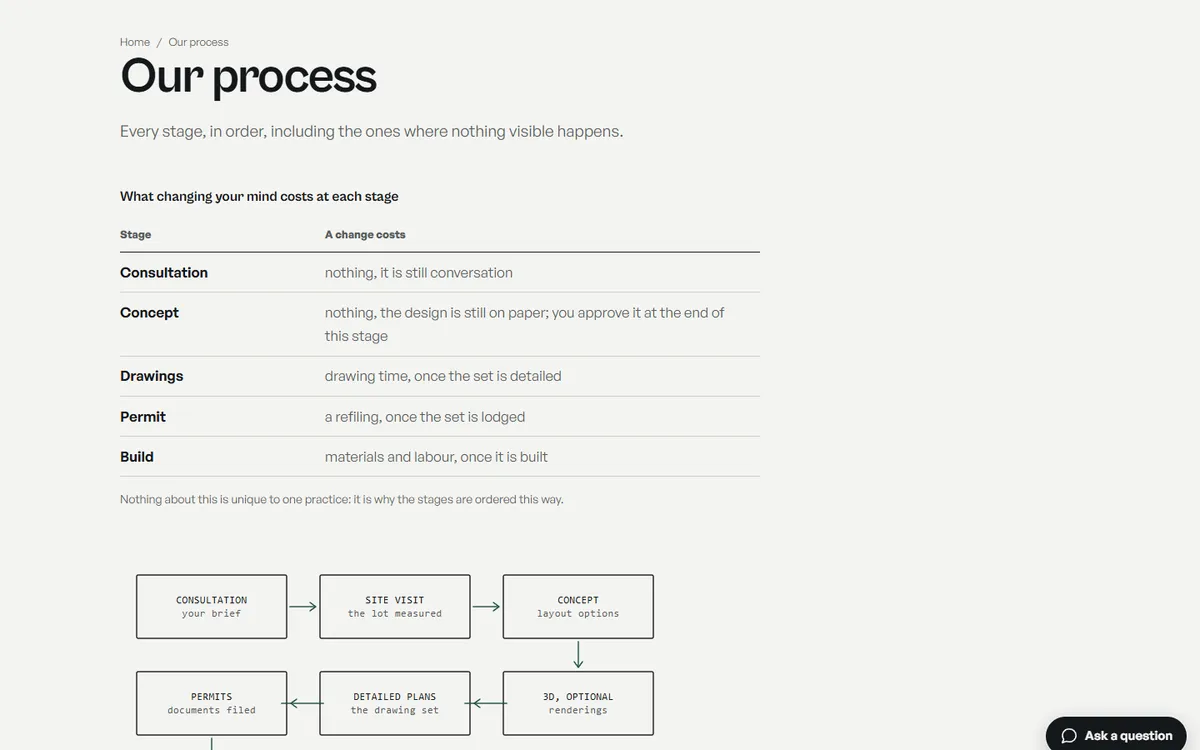
Open the live site of the architecture practice (opens in a new tab)
A site for an architecture practice: custom homes, renovations and permits, with the process drawn stage by stage and a lot coverage calculator.
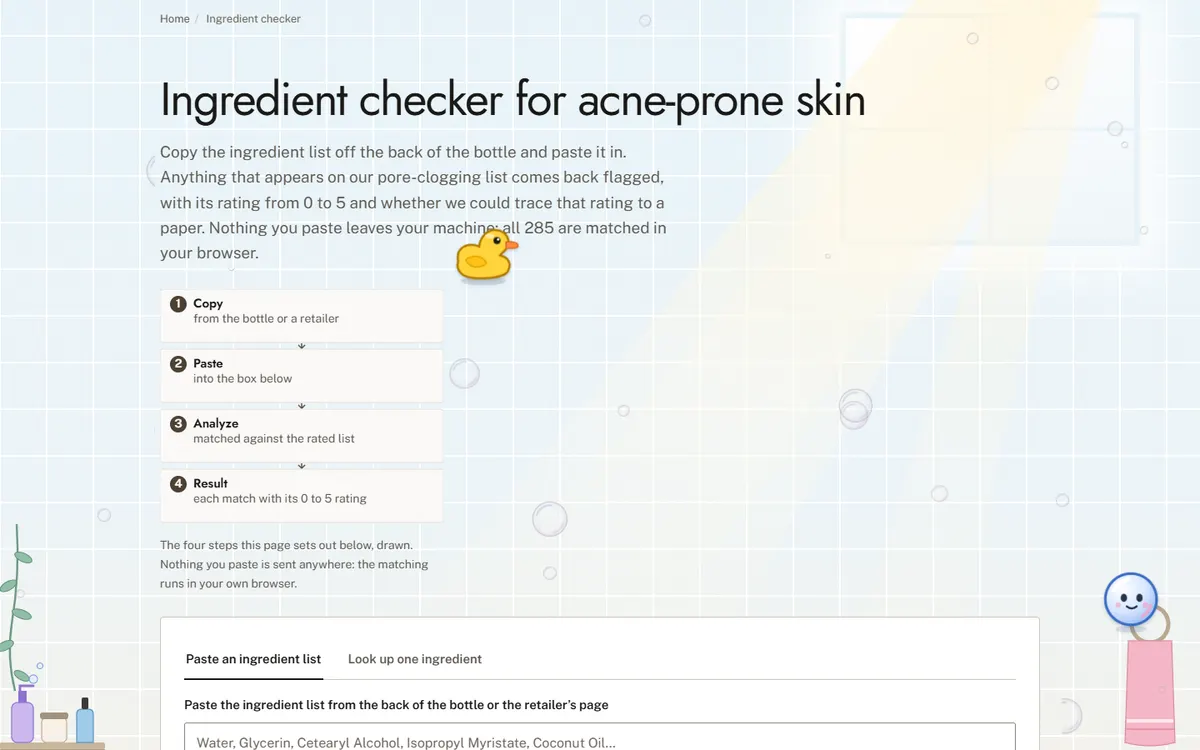
Open the live site of the skincare ingredient reference (opens in a new tab)
A reference site that rates pore-clogging skincare ingredients, with a checker that reads a whole ingredient list.
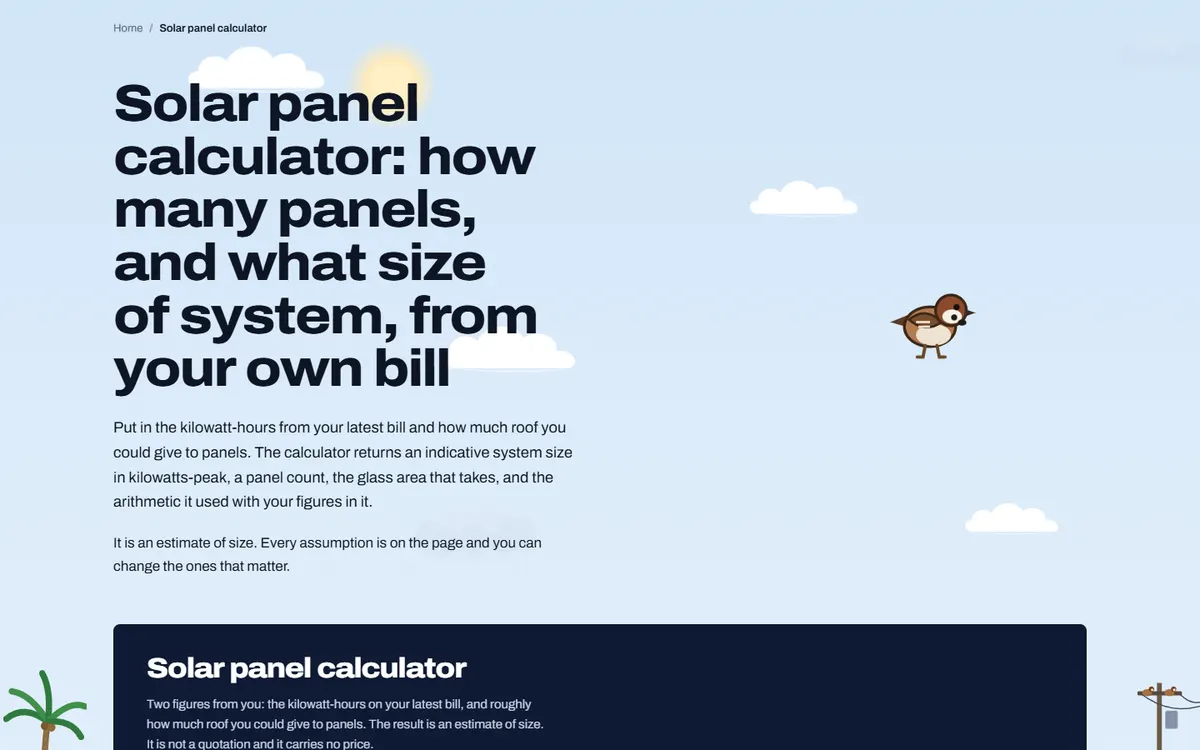
Open the live site of the solar installer (opens in a new tab)
A site for a solar panel installer, built around a calculator that sizes a system from the customer’s own electricity bill.
Six stages on every site, whichever platform it is built on. The scope and the quote are agreed in writing after the first call, before any design starts.
01
What the site has to do, who it is for and what exists today. If there is a site already, we read its Search Console first, because the pages earning impressions decide what the new one must keep.
02
Every page listed with the search it answers and the action it asks for. On a redesign, every old URL is written beside its new home. You sign the map off before design starts.
03
Pages designed with your actual words and pictures, at phone width first. You review in the browser, on a staging address search engines are told to ignore.
04
Titles, descriptions, headings, schema and internal links are written as each page is built, so nothing is added at the end by somebody who never saw the page map.
05
Speed measured on a phone, every page at 320px wide and at 200 percent text, keyboard and screen reader checks, forms sent and received, redirects tested against the new build.
06
The switch, then Search Console read daily for two weeks. The domain, hosting and logins stay in your name, with a written note of how the site is built and a recorded session on editing it.
Speed
Measured in PageSpeed Insights on a phone before launch. Images sized for the slots they fill, fonts that do not block the page, no script a page does not use.
Accessibility
Text contrast, keyboard use, visible focus, alt text written for each picture, 44px tap targets on phones, and every page readable at 200 percent text.
SEO foundations
One title, description and H1 per page, schema, a sitemap that matches the site, clean URLs, redirects from every old address, and Search Console set up in your name.
Hosting handover
The domain, the hosting and every login in your name. We set the site up on your host, recommend one, or host it for you; either way you can move it.
Training
A recorded call showing whoever edits the site how to change a page, add a post and swap a picture, and a short written guide to keep beside it.
Two weeks after launch
Search Console, forms and errors checked daily for the first two weeks, and anything the launch broke fixed straight away.
It depends on how many coverage and business type pages you want and whether the quote request connects to your agency management system or a rater. After a short call you get a written quote for the site you described.
Often, yes, if your system accepts web leads. If not, requests arrive in your inbox with the coverage, ZIP code and renewal date filled in.
Many carriers allow it within their brand and advertising rules. We work within whatever your carrier requires and send you every page to check before launch.
Yes. Each state’s insurance department regulates advertising, and carriers have their own rules. The site avoids rate claims and promises, shows your licenses, and you and your compliance contact approve the words.
Each coverage page is written for that search, with your office details in the schema and your Google Business Profile linked. Reviews and the agencies near you also count, so we look at what your searches show on the call.
The agency does. The domain is registered in its name, and the site and its files go with you if you change carriers or providers.
A 30-minute call in your business hours. Tell us what work you want more of and where, and we will tell you what we would do first and what it involves. Prefer to write? Use the form, with or without a website, and the Passieon Team will reply within two business days.
Message us
Ask anything about your site or where your inquiries are going. It goes straight to a person, not a bot. Leave an email and you get a reply.